Rocket Festivals & the Kuchinarai Talai Spinning Wheel Rocket History
So Kuchinarai is the destination for the UFO “rocket” festival.
Kuchinarai is 70 kms from Kalasin, & the actual location of the festival is in Kut Wa, another 9 kms from Kuchinarai, but Kut Wa lacks facilities, so Kuchinarai is the place to be.
The rocket festival is much older than modern Thailand.
It comes from ancient Tai-Lao fertility rites linked to agriculture and rainmaking.
Before Buddhism became dominant, local people believed heavenly spirits controlled rainfall. Rockets were launched to communicate with or awaken the rain deity known as Phaya Thaen.
The mythology is connected to famous Lao-Isan legends, including:
• Phaya Khankhak (The Toad King)
• Pha Daeng–Nang Ai
In these stories, humans or spirit beings challenge the rain gods, after which the rains return to earth. The rockets symbolically “announce” the planting season to the heavens.
Abstract Every year from May to June, ethnic Lao from Laos and Northeastern Thailand hold a rocket festival called Bun Bangfai. Traditionall...

bun-bangfai.blogspot.com
At this time of the year, there are multiple rocket festivals all over Thailand & Laos, but thanks to the TAT, the one in Yasothon is the most famous. Check out this list of 2026 rocket festivals GTR was able to garner.
(
2026 Rocket Festivals)
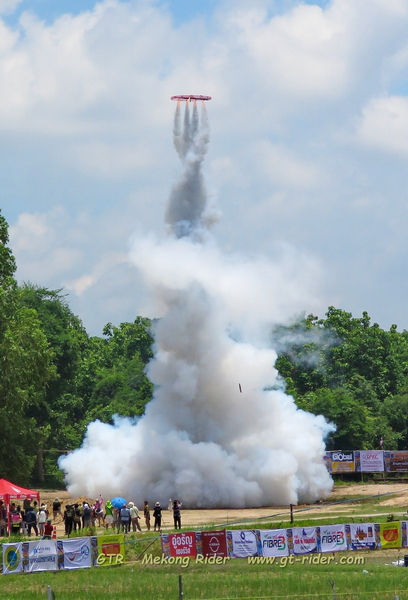
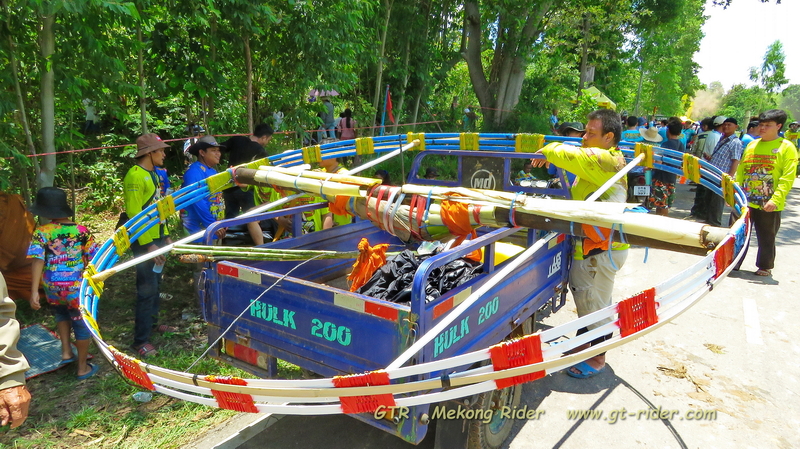
The “Kalasin” rocket festival became famous because of its unique “Talai” spinning wheel-style rocket.
Unlike the long cylindrical rockets seen in places like Yasothon, the Kalasin version is circular and spins rapidly while climbing into the sky, creating dramatic spiral smoke trails.
This style became a cultural trademark of the Phu Thai communities around Kut Wa.
The Phu Thai—who are they?
The Phu Thai originally came from southern China, later moving to Vietnam, Laos, and northeast Thailand.
In Vietnam they are in Điện Biên Phu / Sơn La (Vietnam), and in Laos at Houa Phan and Xiang Khuang.
Before arriving in Thailand from Laos, many Phu Thai communities lived in:
• Muang Vang
• Muang Thaeng
• Muang Phin
• Muang Tapon
• Savannakhet region
These were tributary Tai principalities linked at different times to:
• Lan Xang
• Siam
• Vietnam
Why did they migrate to Kalasin?
The biggest movement into present-day Thailand happened during the late 1700s and early 1800s.
The major causes included:
The major causes included wars between the Siamese and Lao kingdoms - population transfers, forced resettlement, slave raids & political instability after the collapse of the Lan Xang kingdom.
After the defeat of the Lao Rebellion (1826–1829) led by Chao Anouvong, Siam forcibly relocated many Lao and Phu Thai populations west of the Mekong into Isan.
Large numbers settled along the:
Phu Phan mountains
Kalasin basin
Kuchinarai district
Khao Wong area
These locations resembled the upland terrain they already knew.
The Phu Thai in Kalasin became one of the strongest Phu Thai cultural centres in Thailand.
The most important areas include Kuchinarai, Kham Muang, Khao Wong & Huai Phueng.
The famous Phrae Wa silk tradition of Kalasin is strongly associated with Phu Thai weaving culture.
To be continued.